

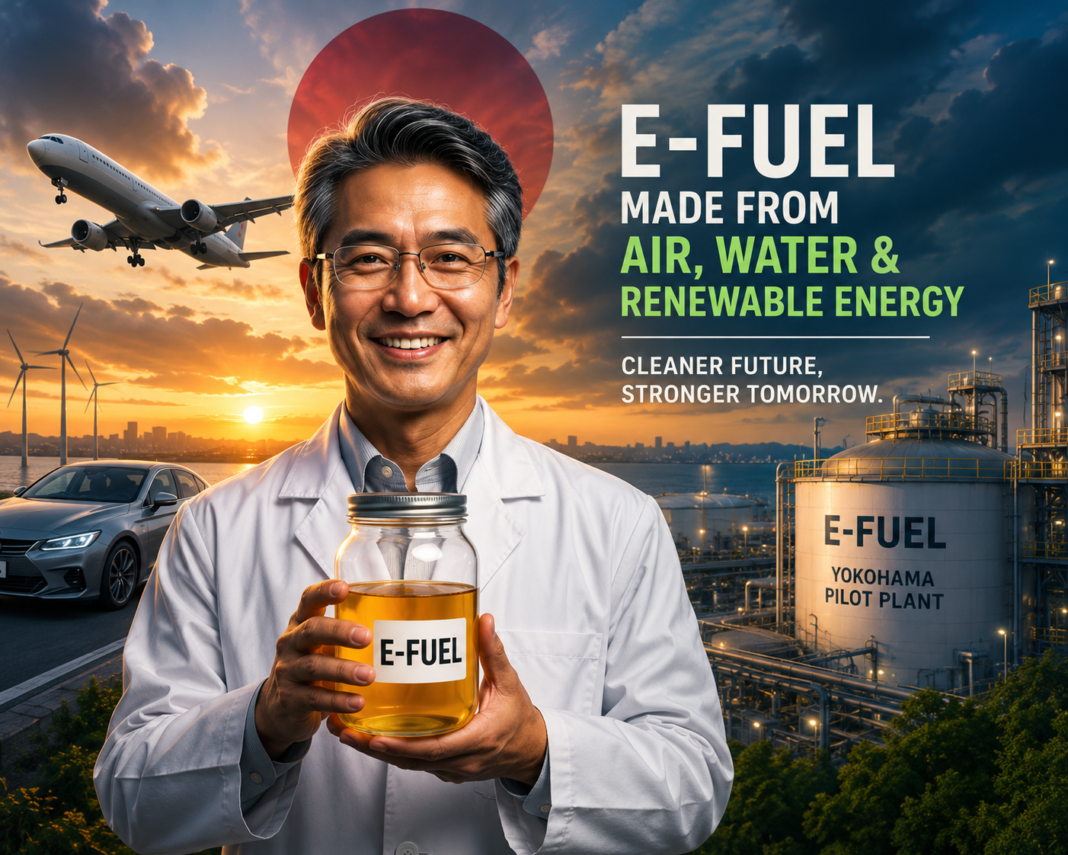
In a major step toward cleaner energy, ENEOS Holdings, Japan’s largest oil company, has successfully developed synthetic fuel using carbon dioxide captured directly from the air, water, and renewable energy.
The innovative fuel, often referred to as “e-fuel,” is currently being produced at a pilot facility in Yokohama, Japan. According to reports, the plant is capable of producing around one barrel of synthetic fuel per day as part of ongoing research and development efforts.
The project reflects a growing global push toward sustainable alternatives that can help reduce dependence on traditional fossil fuels while supporting climate goals.
One of the most promising aspects of this synthetic fuel is its compatibility with existing engines. Unlike some alternative energy technologies that require entirely new infrastructure or vehicle designs, ENEOS says the e-fuel can potentially be used in today’s cars and even aircraft without major modifications.
This could make the transition to cleaner transportation more practical and accessible, especially in industries where fully electric solutions remain challenging.
However, experts note that the technology is still in its early stages. Producing synthetic fuel remains expensive, and current output levels are far from what would be needed for large-scale commercial use. Significant investment, technological improvements, and expanded renewable energy capacity will likely be required before e-fuels become widely available.
Despite these challenges, the development is being viewed as an encouraging sign for the future of sustainable transportation and energy innovation.
As countries around the world continue searching for ways to cut emissions without disrupting existing systems, synthetic fuels may eventually become an important part of the global energy mix.
Disclaimer: This post is for informational purposes only and is based on publicly available reports. The image is AI generated and is just for reference.