

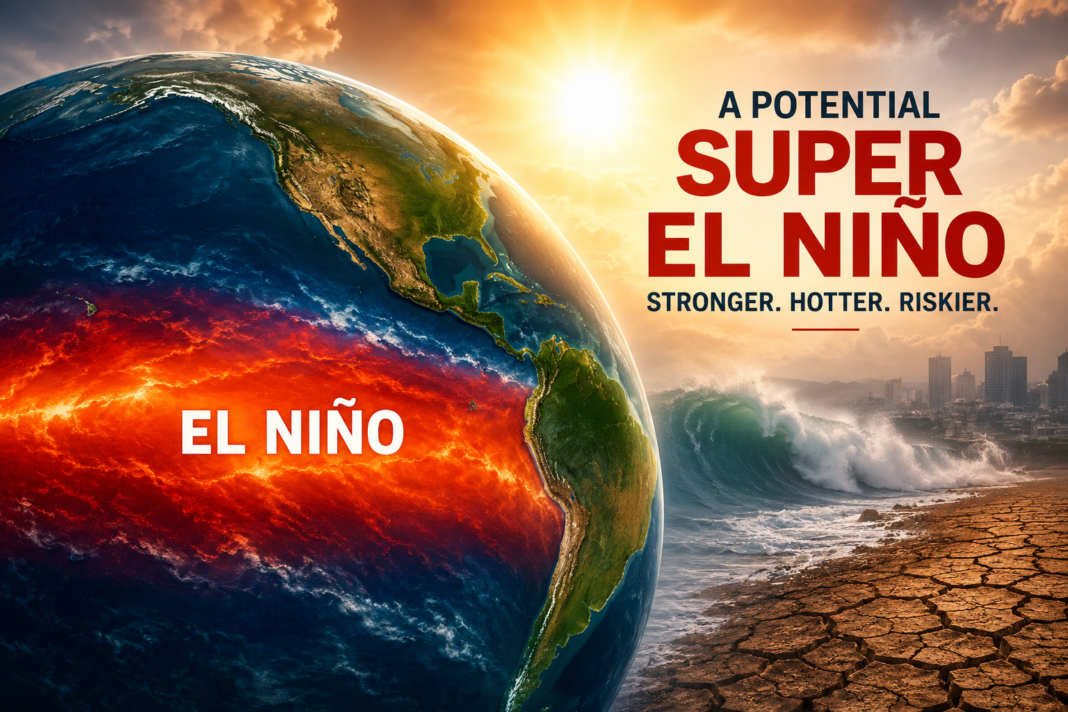
The world may be heading toward a powerful climate event much sooner than scientists originally predicted. According to the latest forecasts from the National Oceanic and Atmospheric Administration (NOAA), El Niño is strengthening rapidly and could evolve into a rare “Super El Niño” later this year.
Climate experts say there is now a two-in-three chance that the event becomes strong or even very strong — a development that could bring intense heatwaves, severe droughts, destructive flooding, and record-breaking global temperatures across multiple regions of the world.
What Is El Niño?
El Niño is a natural climate phenomenon caused by unusually warm ocean temperatures in the central and eastern Pacific Ocean. While it occurs every few years, stronger El Niño events can dramatically alter weather patterns around the globe.
Scientists are particularly concerned because ocean temperatures are already exceptionally warm, even before El Niño has fully peaked. That combination raises the risk of extreme weather events becoming more intense and widespread.
Why Scientists Are Concerned
NOAA’s latest projections suggest the climate system is evolving faster than expected. If conditions continue strengthening, the world could see one of the most powerful El Niño events in decades.
A “Super El Niño” has historically been linked to:
- Dangerous heatwaves in many countries
- Drought conditions in parts of Asia and Australia
- Heavy rainfall and flooding in other regions
- Increased wildfire risks
- Pressure on food supplies and agriculture
- Higher chances of global temperature records being broken
Climate researchers also warn that the added heat from El Niño could temporarily push the planet into uncharted temperature territory, especially as long-term global warming continues to intensify.
Global Temperatures Could Reach New Highs
Recent years have already ranked among the hottest ever recorded. With El Niño now building momentum, scientists believe 2026 could potentially challenge previous global heat records.
The combination of greenhouse gas emissions and warming Pacific waters creates what experts describe as a “stacking effect,” where natural climate cycles amplify human-driven climate change.
That means communities worldwide may need to prepare for more unpredictable and extreme weather in the coming months.
What Happens Next?
While forecasts continue to evolve, climate agencies around the world are closely monitoring ocean temperatures and atmospheric changes over the Pacific.
Scientists stress that not every region will experience the same impacts, but the overall signal is becoming increasingly clear: the planet is entering another major climate phase, and its effects could be felt globally.
As governments and communities prepare for the months ahead, experts say awareness and early planning will be key to reducing risks associated with extreme weather events.