
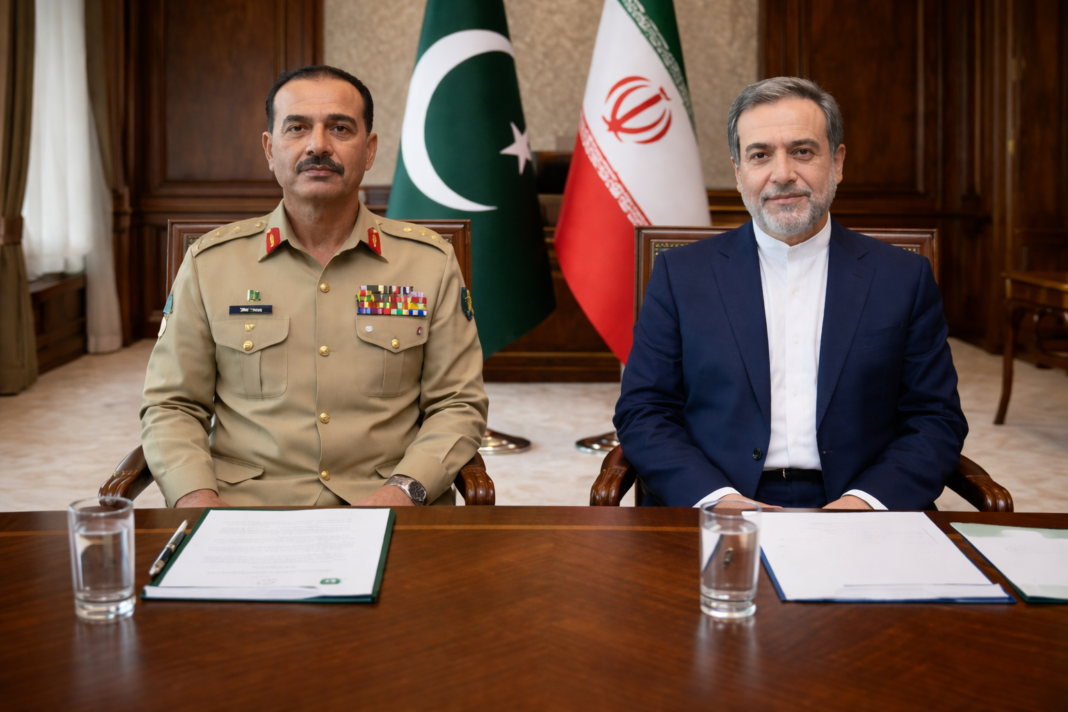
Pakistan is once again emerging as an important regional diplomatic bridge, as the first round of high-level talks between Chief of Army Staff General Asim Munir and Iranian Foreign Minister Abbas Araghchi has concluded in Tehran, with further discussions expected in the coming days.
The meeting marks a significant moment in Pakistan’s growing diplomatic engagement in the Middle East, particularly as tensions continue around Iran’s nuclear program and its broader relationship with the United States.
High-Level Delegation Signals Strategic Importance
Pakistan’s delegation, which also includes Interior Minister Mohsin Naqvi, is participating in discussions focused on regional stability and Iran’s nuclear negotiations. While no formal breakthrough has yet been announced, officials from both sides have described the talks as constructive and ongoing.
The visit underlines Pakistan’s increasing role as a potential mediator in sensitive geopolitical matters, especially as dialogue between Iran and the US remains fragile.
Pakistan’s Balancing Role in Regional Diplomacy
Pakistan maintains diplomatic ties with both Tehran and Washington, placing it in a unique position to facilitate communication between parties that often struggle to find common ground.
Observers say Islamabad’s involvement reflects:
- Pakistan’s strategic regional influence
- Its neutral diplomatic standing in key disputes
- Growing trust from neighboring and global powers
Iranian Foreign Ministry spokesman Esmaeil Baqaei confirmed that message exchanges between involved parties are continuing, suggesting that diplomatic channels remain active despite unresolved differences.
Previous Talks Ended Without Agreement
The current Tehran discussions follow earlier rounds of negotiations involving US Vice President JD Vance and Iranian Parliament Speaker Mohammad Bagher Ghalibaf, which reportedly ended without a final agreement.
That lack of progress has increased the importance of fresh diplomatic efforts, with Pakistan now seen as a constructive intermediary capable of helping ease communication gaps.
Focus on Stability, Not Confrontation
Analysts note that Pakistan’s approach appears centered on de-escalation and dialogue rather than direct intervention. In a region facing complex security challenges, Islamabad’s emphasis on peaceful negotiation could help lower tensions and encourage further diplomatic engagement.
Though the details of the current talks remain confidential, expectations are rising that continued discussions may create momentum toward broader understanding between Iran and international stakeholders.
Looking Ahead
As more rounds of dialogue are planned in Tehran, Pakistan’s diplomatic role may become increasingly important in shaping future regional outcomes. While no immediate agreement has emerged, the continuation of talks itself is being viewed as a positive signal.
In a tense geopolitical climate, Pakistan’s presence at the negotiating table reflects its evolving role as a trusted regional facilitator—one focused on dialogue, stability, and constructive engagement.