
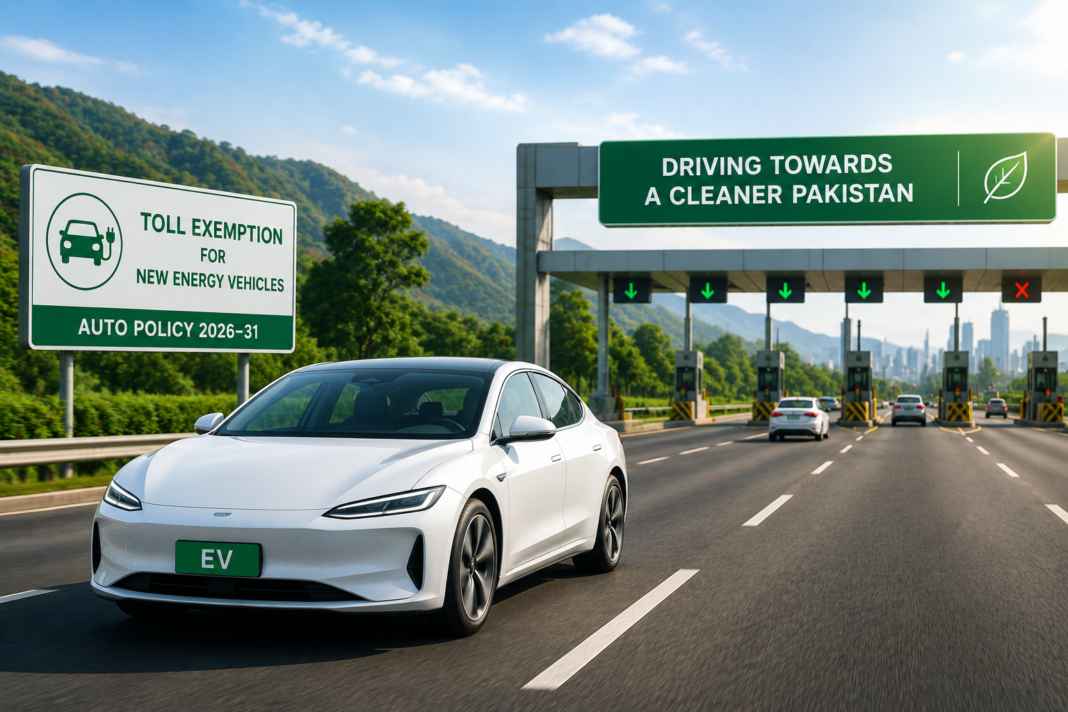
Pakistan is preparing to take a major step toward cleaner and smarter transportation as the government considers toll exemptions for New Energy Vehicles (NEVs) under the upcoming Auto Policy 2026–31.
The proposed initiative is designed to encourage the adoption of environmentally friendly vehicles by reducing travel costs on motorways and national highways for electric and hybrid vehicle owners. If implemented, the move could make electric mobility more attractive for everyday commuters and businesses alike.
What Are NEVs?
New Energy Vehicles, commonly known as NEVs, include:
- Battery-electric vehicles (EVs)
- Plug-in hybrid electric vehicles (PHEVs)
- Fuel-cell electric vehicles (FCEVs)
These vehicles rely on cleaner energy sources compared to traditional petrol and diesel-powered cars, helping reduce air pollution and fuel dependency.
A Big Shift in Pakistan’s Auto Industry
The upcoming Auto Policy 2026–31 is expected to introduce several reforms aimed at modernizing Pakistan’s automotive sector. Alongside toll exemptions, officials are reportedly considering a gradual reduction in duties on imported and locally assembled vehicles.
The policy also plans to phase out additional customs and regulatory duties by 2030, creating a more competitive and investor-friendly environment for the auto industry.
Experts believe these measures could:
- Promote local vehicle manufacturing
- Encourage foreign investment
- Support innovation in clean technology
- Make electric vehicles more affordable over time
Why This Matters
Pakistan has been exploring ways to reduce carbon emissions and improve fuel efficiency as global trends shift toward sustainable transportation. Incentives like toll relief can help speed up the transition by making green mobility financially practical for consumers.
The move may also help reduce the country’s fuel import burden while encouraging the development of charging infrastructure and clean-energy ecosystems.
As more countries invest heavily in electric transportation, Pakistan’s latest policy direction signals a growing commitment to sustainability and long-term economic modernization.
Challenges Still Remain
While the proposed reforms are promising, experts say the success of electric mobility in Pakistan will also depend on:
- Availability of charging stations
- Reliable electricity supply
- Affordable EV pricing
- Consumer awareness
- Local manufacturing support
Without strong infrastructure and consistent implementation, EV adoption could still face hurdles in the coming years.
A Positive Step Toward Sustainable Mobility
The planned incentives under Auto Policy 2026–31 reflect Pakistan’s broader ambition to build a cleaner, more efficient transportation future. Toll exemptions for NEVs could become an important early incentive that encourages more drivers to consider electric and hybrid vehicles.
If successfully implemented, the reforms may not only reshape Pakistan’s automotive industry but also contribute to a greener and more sustainable economy.
Disclaimer: This article is based on publicly available reports and is intended for informational purposes only. Policies and proposals may change following official government approvals.