
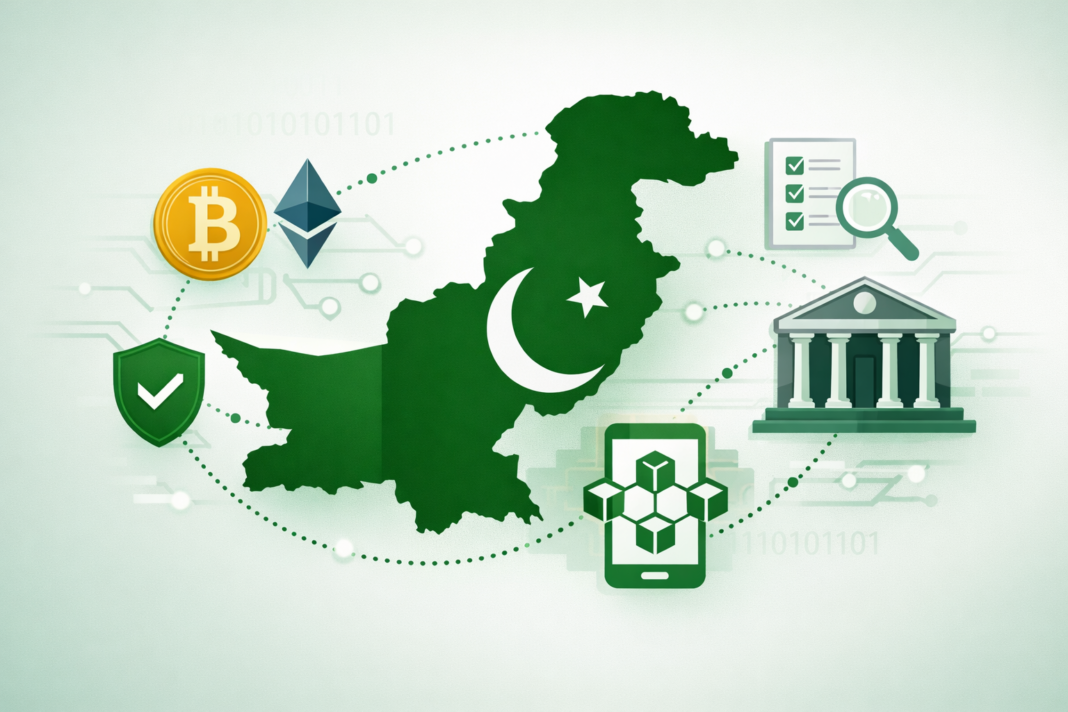
Pakistan has officially taken a landmark step toward embracing the digital finance era, as the State Bank of Pakistan (SBP) has lifted its long-standing restrictions on cryptocurrency-related banking activity. In a significant policy reversal, banks are now permitted to open accounts for licensed Virtual Asset Service Providers (VASPs), marking the country’s first formal move toward integrating crypto into its regulated financial system.
This development effectively ends the crypto banking freeze imposed in 2018, when financial institutions were prohibited from dealing with digital assets due to concerns over fraud, money laundering, and lack of regulatory oversight.
A New Era Under the Virtual Assets Act 2026
The policy shift comes in the wake of Pakistan’s newly introduced Virtual Assets Act 2026, a legal framework designed to regulate cryptocurrency businesses, exchanges, and digital asset transactions within the country.
Under the updated guidelines:
- Licensed crypto firms can now access banking channels legally.
- Banks must carry out strict customer verification and due diligence.
- Anti-money laundering (AML) and counter-terror financing (CTF) rules remain mandatory.
- Suspicious crypto-linked transactions must be reported immediately.
- Banks are still prohibited from directly buying, holding, or investing in cryptocurrencies themselves.
This means Pakistan is not legalizing unrestricted crypto trading, but rather building a controlled ecosystem where digital assets can operate under supervision.
Why This Matters for Pakistan
The decision is being seen as a major confidence boost for Pakistan’s fintech and blockchain sectors. For years, crypto entrepreneurs in the country operated in uncertainty, often without access to formal banking services.
Now, with regulated access to banking infrastructure:
- Startups can operate more transparently.
- Investors may gain stronger protections.
- International crypto businesses could view Pakistan as a growing regulated market.
Analysts say the move could also help Pakistan attract innovation, foreign investment, and tax revenue from a sector that has largely remained outside formal economic channels.
Balancing Innovation with Risk
Despite the optimism, regulators are moving cautiously. Cryptocurrency remains a high-risk sector globally, often linked to volatility and illicit finance concerns. By allowing banking access only to licensed providers—and not to unregulated operators—the SBP appears focused on balancing innovation with financial stability.
Pakistan’s crypto market has seen growing public interest in recent years, especially among young investors and tech-savvy entrepreneurs. This latest reform signals that the country is no longer ignoring digital assets, but instead choosing to regulate and monitor them from within the financial system.
Looking Ahead
The lifting of the crypto banking ban could reshape Pakistan’s digital economy in the years ahead. If implemented effectively, it may pave the way for broader blockchain adoption, clearer investor safeguards, and a more modern financial infrastructure.
For Pakistan, this is more than a policy update—it is a signal that the future of finance is now part of the national conversation.