

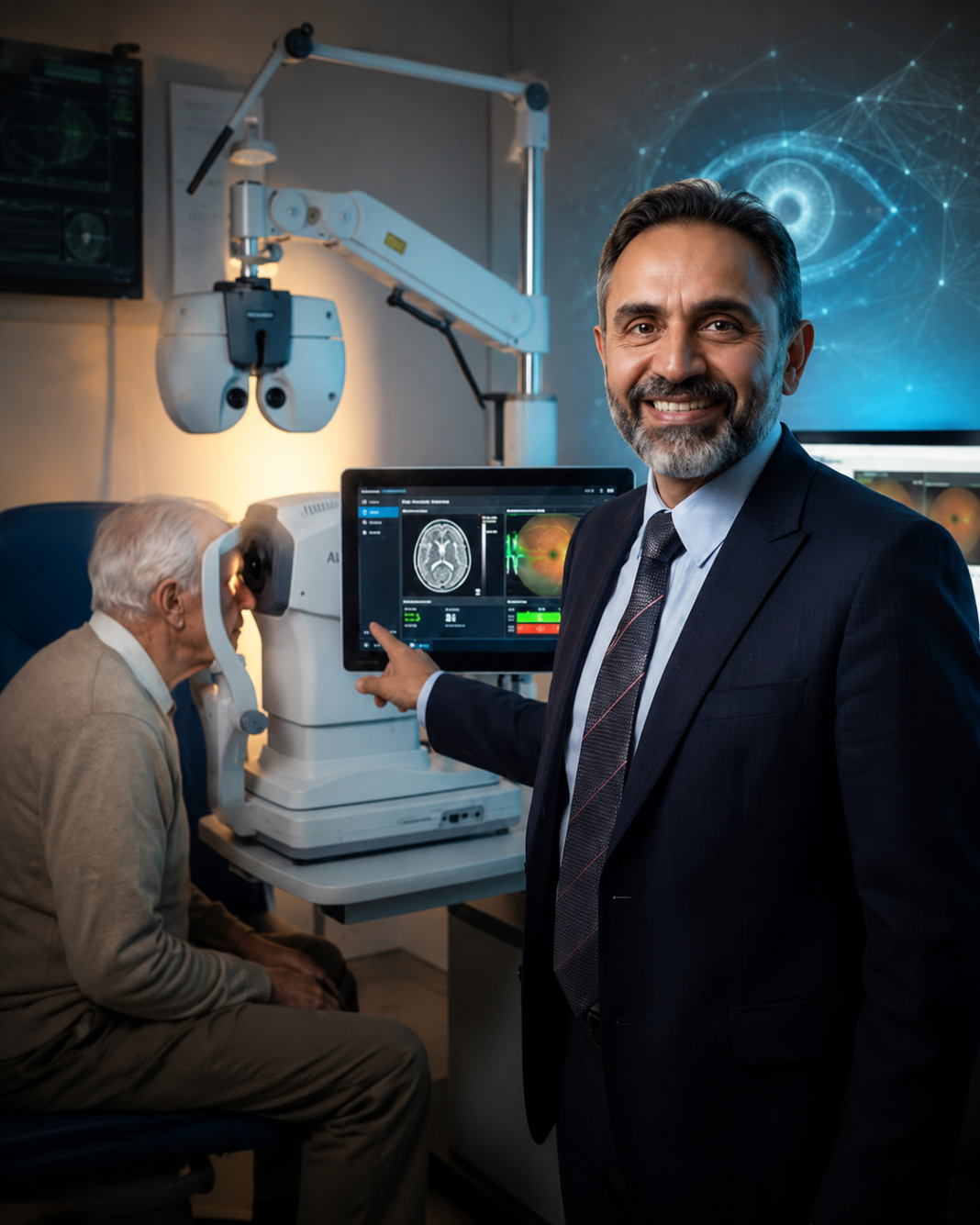
A groundbreaking medical innovation developed by British-Pakistani scientist Professor Rayaz Malik could change the future of early disease detection around the world.
Based in Doha, Professor Malik and researchers at Weill Cornell Medicine-Qatar have created an AI-powered eye scan capable of detecting dementia and diabetic nerve damage within just a few minutes.
The technology uses a quick 2–3 minute corneal scan combined with advanced imaging and artificial intelligence to identify tiny nerve changes in the eye long before visible symptoms begin to appear.
How The AI Eye Scan Works
The scan focuses on the cornea — the transparent front layer of the eye — where microscopic nerve fibers can reveal early signs of neurological and chronic diseases.
Researchers say artificial intelligence plays a major role by instantly analyzing thousands of data points and imaging features. This allows doctors to detect abnormalities with greater speed and accuracy compared to traditional methods.
According to experts, the system may also help identify neurodegenerative diseases such as Parkinson’s disease and Multiple sclerosis at much earlier stages.
A Major Breakthrough For Diabetes Detection
The development could be especially important for countries like Pakistan, where diabetes cases continue to rise rapidly.
Early detection of diabetic nerve damage often remains difficult because symptoms can take years to appear. By the time patients notice warning signs, significant damage may already have occurred.
Researchers believe this non-invasive eye scan could help doctors diagnose complications sooner, allowing patients to receive treatment earlier and potentially improve long-term health outcomes.
The Future Of AI In Healthcare
Artificial intelligence is increasingly transforming healthcare, from faster diagnoses to more personalized treatments. Innovations like this eye scan highlight how AI could make medical testing quicker, more accessible, and less invasive.
Experts say the technology still requires wider clinical adoption and further testing, but early findings are generating excitement across the medical community.
For many patients, especially those at risk of neurological disorders or diabetes complications, a simple eye scan may soon become a powerful lifesaving tool.
Disclaimer
This article is for informational purposes only and is based on publicly available reports. The featured image is AI-generated and intended solely for illustrative purposes.