
Chery’s PHEV Offensive: Competing With MG and Jaecoo in Pakistan’s Plug-In SUV Market
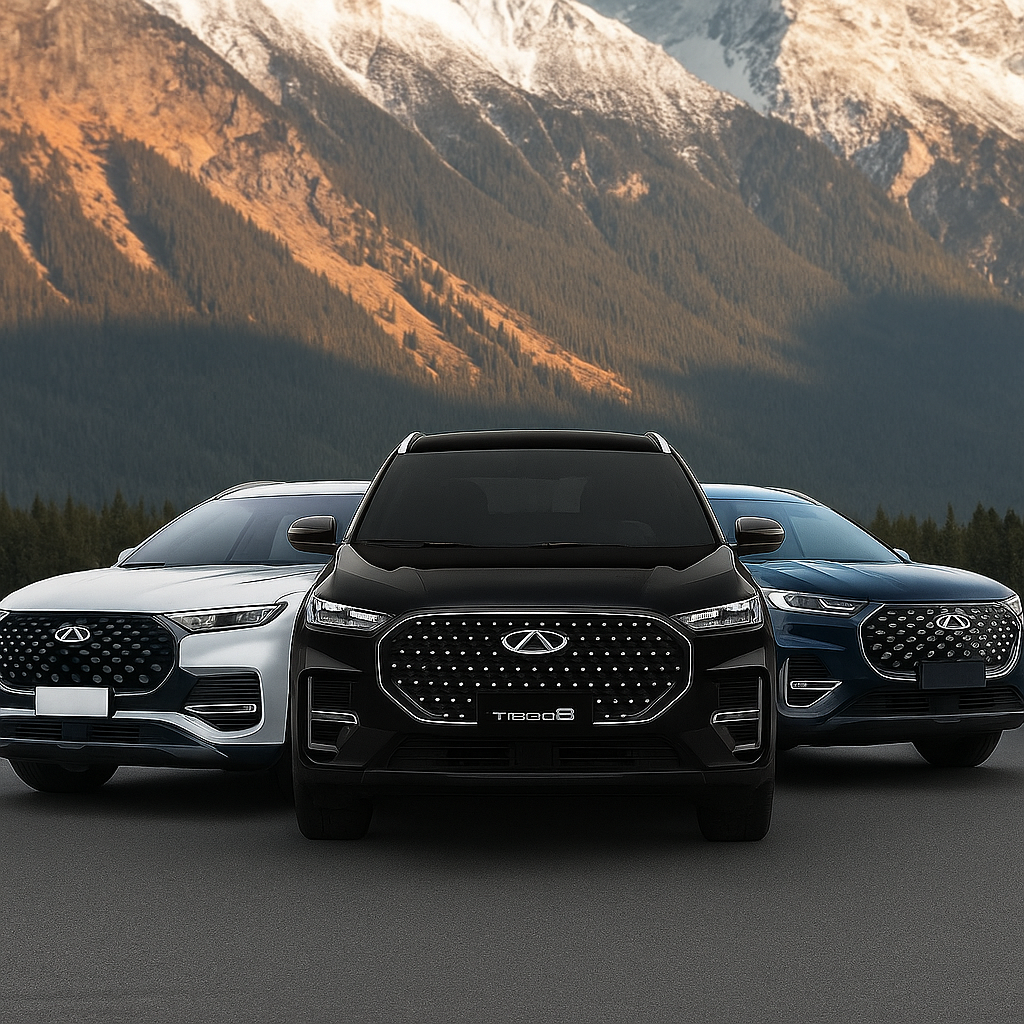
Chery has entered a new chapter in its partnership with Master Group by introducing three plug-in hybrid (PHEV) SUVs: the Tiggo 7, Tiggo 8, and Tiggo 9. These PHEVs are engineered with advanced hybrid powertrains, large battery packs, and multi-motor layouts — aimed at providing meaningful EV driving capability, high performance, and long-range flexibility.
At the same time, other PHEV players in the local SUV space — including MG HS PHEV and Jaecoo J7 PHEV — offer compelling alternatives. Understanding how Chery’s PHEV line stacks up against them is critical for buyers who want to pick a plug-in SUV that truly fits their daily driving, family requirements, and long-term cost ambitions.
Technical Breakdown: Chery’s Tiggo 7, 8 & 9 PHEVs
Tiggo 7 PHEV
- Equipped with a 1.5L turbo engine and dual electric motors, the Tiggo 7 PHEV uses a three-engine hybrid setup to deliver both efficiency and power.
- Its battery pack size is 18.3 kWh, giving it an EV-only driving range of 77 km under local driving conditions.
- The combined system output reaches 342 hp and 525 Nm, providing strong acceleration and torque for versatile driving.
- It supports AC charging for home use and DC fast charging for rapid recharging when needed.
Tiggo 8 PHEV
- Shares the same turbo engine and dual-motor PHEV architecture, tuned here for higher power output: 543 hp and 830 Nm.
- Uses the same 18.3 kWh battery, delivering the same 77 km EV range as the Tiggo 7 in local conditions.
- Designed as a practical 7-seater, this SUV blends performance, space, and electric driving capability.
- Charging supports both AC and DC.
Tiggo 9 PHEV
- Features a more complex 1.5L turbo + triple electric motor setup, giving it AWD-like handling and exceptional hybrid efficiency.
- Its battery is 34.46 kWh, enabling an EV-only range of 145 km.
- The total hybrid system produces 610 hp and 920 Nm, placing it in a very high-performance class.
- Supports DC fast charging, allowing rapid energy replenishment for longer journeys.
Other PHEV SUVs in the Same Segment: MG HS PHEV and Jaecoo J7 PHEV
MG HS PHEV
- The HS PHEV combines a 1.5L turbocharged petrol engine with a single electric motor, making for a simpler but efficient hybrid architecture.
- It uses a 16.6 kWh battery, which gives the vehicle an EV-only range of around 50–55 km.
- The combined output of its hybrid system is 280 hp (approx.) and 480 Nm, offering respectable performance for daily driving and urban commuting.
- Charging is designed to be user-friendly, supporting typical home AC charging as well as faster top-ups where available.
Jaecoo J7 PHEV
- The Jaecoo J7 PHEV comes with a 1.5L turbo engine paired with a dual-motor hybrid system, combining strong electric capability with traditional power.
- Its battery capacity is approximately 17 kWh, enabling an EV-only driving range of around 60–80 km, depending on load and driving style.
- The hybrid powertrain produces a combined 300+ hp (exact combined output may depend on the trim) and high torque, delivering a balanced mix of performance and fuel economy.
- Charging infrastructure supports AC charging and faster DC charging for quick top-ups.
How Chery’s Tiggo PHEVs Compare With MG HS PHEV and Jaecoo J7 PHEV
Electric-Only Range & Battery Capacity
- Tiggo 7 and Tiggo 8 both use 18.3 kWh batteries with EV range of 77 km, which is notably higher than MG HS’s 50–55 km from its smaller battery.
- Jaecoo J7’s EV range is decent, but typically lower than Chery’s Tiggo 7/8, depending on driving style and conditions.
- The Tiggo 9’s 34.46 kWh battery gives it a market-leading 145 km EV-only range, surpassing both MG and Jaecoo in all-electric usability.
Power & Hybrid Performance
- With 342 hp / 525 Nm, the Tiggo 7 has more combined power than MG HS, which is tuned more for efficiency than outright performance.
- The Tiggo 8’s 543 hp / 830 Nm output is significantly higher than Jaecoo J7’s hybrid numbers, giving it a clear performance edge, especially under load or on inclines.
- The Tiggo 9, with 610 hp and 920 Nm, is in a premium PHEV class, offering performance that neither MG HS nor Jaecoo J7 can match.
Charging & Real-World Usability
- The Tiggo PHEVs are built with both AC and DC charging in mind, allowing owners to maximize electric driving and minimize reliance on petrol.
- MG HS’s smaller battery means quicker home charging, but it offers less EV driving distance.
- Jaecoo J7 strikes a balance, but its EV distance and battery capacity put it between MG and Chery in terms of electric usability.
Suitability for Different Buyer Profiles
- Tiggo 7 PHEV is ideal for those who want compact SUV comfort, strong hybrid performance, and significant EV driving without paying for a very large battery.
- Tiggo 8 PHEV targets families who need three rows but still want hybrid efficiency and performance.
- Tiggo 9 PHEV is for buyers who prioritize high performance, long EV range, and premium hybrid technology.
- MG HS PHEV remains a value-focused PHEV option for urban commuting and modest EV driving.
- Jaecoo J7 PHEV appeals to customers looking for a hybrid SUV with a solid mix of performance, EV capability, and slightly lower total cost than Tiggo 9.
What This Means for Pakistan’s Plug-In Hybrid SUV Landscape
The entry of Chery’s three-model PHEV lineup, when viewed alongside MG HS PHEV and Jaecoo J7 PHEV, dramatically raises the stakes in Pakistan’s plug-in hybrid SUV market. Chery’s Tiggo models offer a broader spread: from compact efficient PHEV (Tiggo 7) to spacious performance PHEV (Tiggo 8) to high-powered, long-range flagship PHEV (Tiggo 9).
This variety means more choices for Pakistani buyers, depending on how they drive, how much they care about EV-only range, and how much hybrid performance they want. For a market that is still building its EV and PHEV ecosystem, such a diverse PHEV line-up is likely to accelerate adoption — especially for buyers who want to reduce fuel bills without fully committing to EV infrastructure.