
Pakistan to Join China’s Historic Rapid Space Mission: A New Era of Space Collaboration
China is preparing to launch its Shenzhou-21 manned spacecraft to the Tiangong Space Station, featuring a major technological breakthrough — an upgraded rapid rendezvous and docking system that will cut docking time almost in half. Instead of the previous 6.5 hours, the spacecraft will now dock in approximately 3.5 hours, showcasing remarkable progress in space precision, efficiency, and astronaut well-being.
Experts from the China Academy of Space Technology shared that enhanced orbit calculation, improved sensor accuracy, and advanced docking systems have enabled this innovation. The faster travel time means astronauts will reach the space station less fatigued and ready to begin scientific tasks sooner — a major boost to mission productivity.
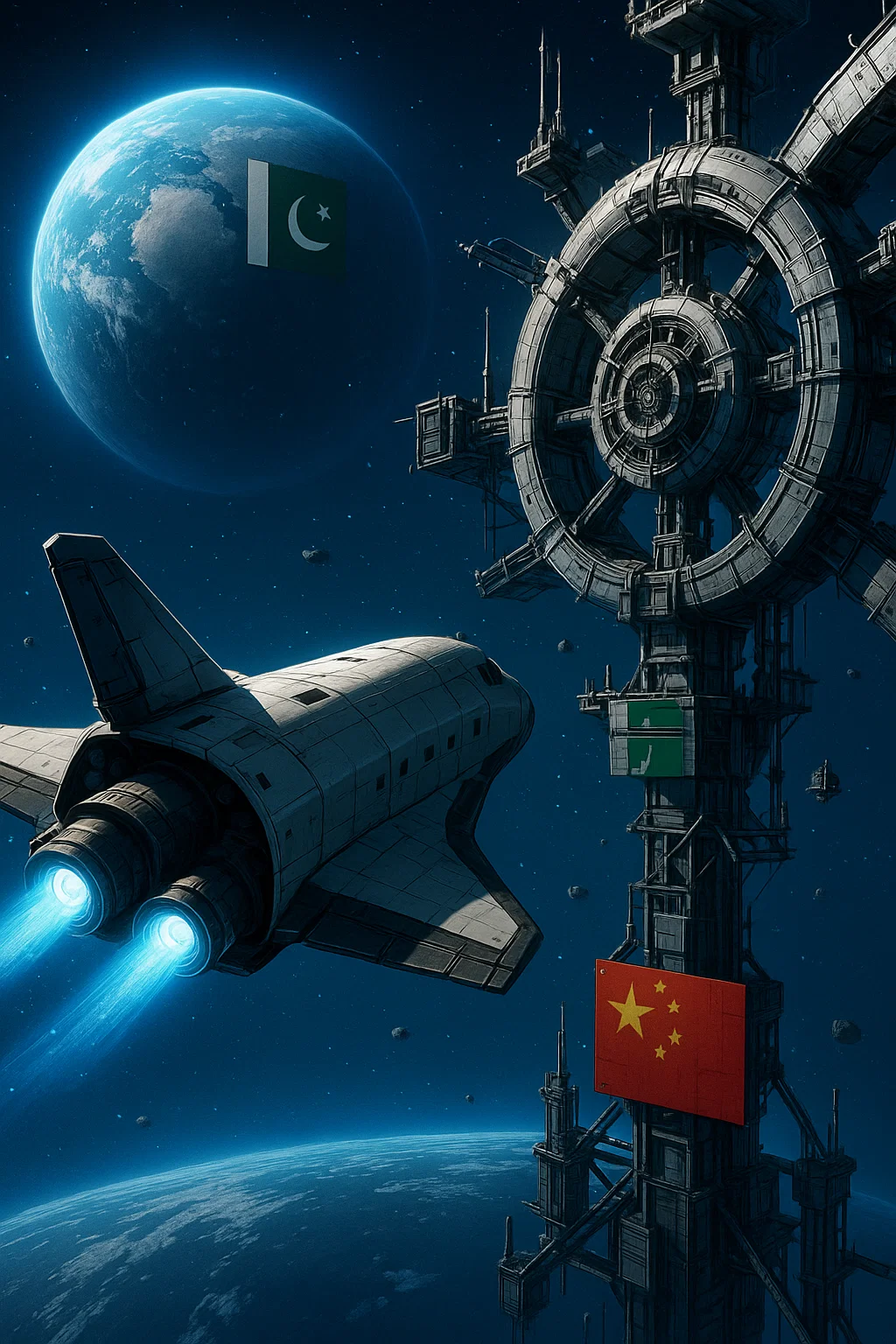
Pakistan to Send First Astronaut to China’s Space Station
In a highly encouraging development for Pakistan, the China Manned Space Agency (CMSA) confirmed that astronaut training and selection is underway in collaboration with Pakistan. One Pakistani astronaut is expected to join a short-term mission soon as a payload specialist.
The astronaut will participate in station operations and conduct scientific experiments that reflect Pakistan’s research priorities. This landmark opportunity will allow Pakistan to gain first-hand experience in human spaceflight, strengthening its scientific capacity and global standing in space technology.
While Pakistan is still developing its own manned spaceflight program, this cooperation marks a major leap forward. Experts believe the partnership will support scientific research, boost technological advancement, and reinforce strategic space collaboration between the two nations — a motivating message for all developing countries aiming to participate in global space exploration.