
Punjab Bans Vehicles Without Green Emission Stickers from November 15
As smog season tightens its grip on Punjab’s cities, the provincial government has rolled out a decisive crackdown: from November 15, any vehicle found on the road without a valid green emission sticker will be seized. The new enforcement drive by the Punjab Environmental Protection Agency (EPA) aims to bring vehicular pollution under control — a leading cause of the dense smog that plagues cities like Lahore every winter.
A Step Toward Cleaner Air
For years, experts have warned that vehicular emissions are one of the biggest contributors to Punjab’s worsening air quality. With AQI levels regularly crossing hazardous limits during the winter months, this move marks the government’s strongest action yet against polluting vehicles.
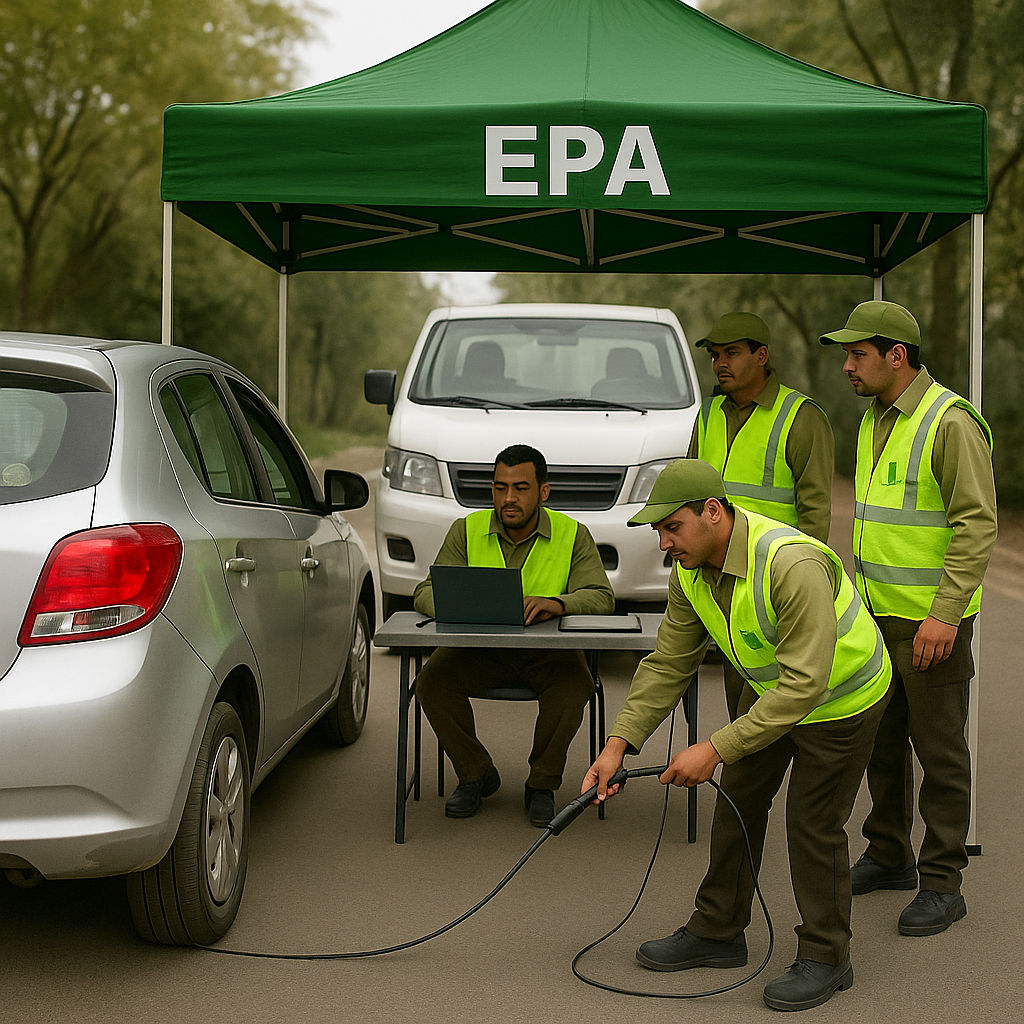
Under the new directive, every vehicle older than three years must undergo an Exhaust Testing System (ETS) examination. Those meeting the environmental standards will receive a green sticker, certifying that the vehicle’s emissions fall within permissible limits. Vehicles failing the test — or operating without the sticker — will face immediate confiscation from November 15 onward.
What Is the Green Emission Sticker?
The green sticker serves as a visible certification that a vehicle has passed its emissions test. The sticker is issued after the vehicle successfully clears the ETS process, which checks exhaust gases, smoke density, and sometimes noise levels.
- Motorcycles must also undergo testing, with a nominal fee charged.
- Cars are charged based on engine capacity, ranging from a few hundred to a couple of thousand rupees.
- Commercial vehicles and public transport fleets are equally subject to the new rule.
The EPA has established testing booths across major cities and district headquarters. Motorists are advised to visit early to avoid long queues closer to the deadline.
Why This Ban Was Needed
Punjab’s smog problem has grown worse every year due to a mix of vehicle exhaust, industrial emissions, and seasonal crop burning. Vehicles, however, are considered the most controllable of these sources.
According to the EPA, enforcing emission checks can significantly reduce carbon monoxide, nitrogen oxides, and particulate matter — pollutants responsible for respiratory diseases, poor visibility, and overall environmental degradation.
This initiative also aligns Punjab with global best practices, where emission testing is a routine part of urban pollution control.
Who Will Be Affected
This regulation applies to all vehicles operating within Punjab, regardless of registration location.
Key points include:
- All private cars, motorcycles, buses, trucks, and commercial fleets must carry the green sticker.
- Vehicles under three years old may be temporarily exempt but will still be required to comply once they cross the age limit.
- Vehicles entering Punjab from other provinces may face checkpoints on major routes, including the Lahore–Islamabad Motorway, to ensure compliance.
- Ride-hailing and logistics companies are required to ensure that every vehicle in their fleet passes the ETS inspection.
The Deadline and Penalties
The government’s tolerance period is officially over. The seizure phase begins on November 15, meaning any vehicle found on the road without the sticker will be impounded on the spot.
Authorities will also impose fines on non-compliant owners. Motorists caught repeatedly violating the rule could face extended impoundment and additional penalties.
EPA teams have already begun setting up mobile testing units and enforcement checkpoints in Lahore, Faisalabad, Rawalpindi, and other high-density zones.
What Motorists Need to Do
To comply with the new regulation:
- Visit an ETS-certified testing booth before the deadline.
- Pay the testing fee (based on your vehicle type and engine size).
- Undergo the emissions test — a quick inspection of your vehicle’s exhaust and combustion quality.
- Obtain your green sticker if the vehicle meets standards.
- Fix emission-related issues if your vehicle fails the test, and retake it promptly.
For vehicle buyers and sellers, it’s advisable to ensure the presence of a green sticker before completing a transfer — as vehicles without it may not legally be allowed to operate on roads.
Challenges in Implementation
While the move has been widely appreciated, it brings practical challenges.
- Testing capacity: Many citizens worry whether there are enough ETS booths to cater to millions of vehicles before the deadline.
- Awareness: A large number of motorists remain unaware of the requirement, especially outside major cities.
- Older vehicles: Owners of older models may face difficulty meeting emission standards without expensive engine repairs.
- Enforcement consistency: Authorities will need to ensure fair and transparent checks across urban and rural Punjab to prevent uneven application of the law.
Despite these hurdles, environmentalists view this step as a major milestone toward curbing air pollution and improving public health.
Will It Solve the Smog Crisis?
Experts believe this is a critical first step but not a standalone solution. While vehicular emissions are a major cause, industrial smoke, construction dust, and crop residue burning also contribute heavily to the region’s winter smog.
To achieve lasting improvement, Punjab will need to combine this policy with stronger industrial regulation, better waste management, and a push toward clean public transport and electric vehicles.
Still, the enforcement of the green sticker system is expected to yield visible short-term relief by reducing carbon and particulate emissions from the most polluting vehicles.
A Turning Point for Environmental Policy
For years, emission standards in Pakistan have existed largely on paper, with little to no enforcement. This new move by the Punjab government — involving strict deadlines, physical testing, and roadside checks — signals a shift from passive policy to active enforcement.
If implemented effectively, this crackdown could mark the beginning of a new era of environmental accountability for vehicle owners, manufacturers, and regulatory bodies alike.
Final Word
Punjab’s ban on vehicles without green emission stickers is more than a bureaucratic exercise — it’s a statement of intent. The government is finally treating air pollution as an emergency, not an inconvenience.
For motorists, the message is clear: Get your vehicle tested, get your green sticker, and do your part for cleaner air.
For the province, this could be the first meaningful step toward reclaiming blue skies from the grip of smog.