

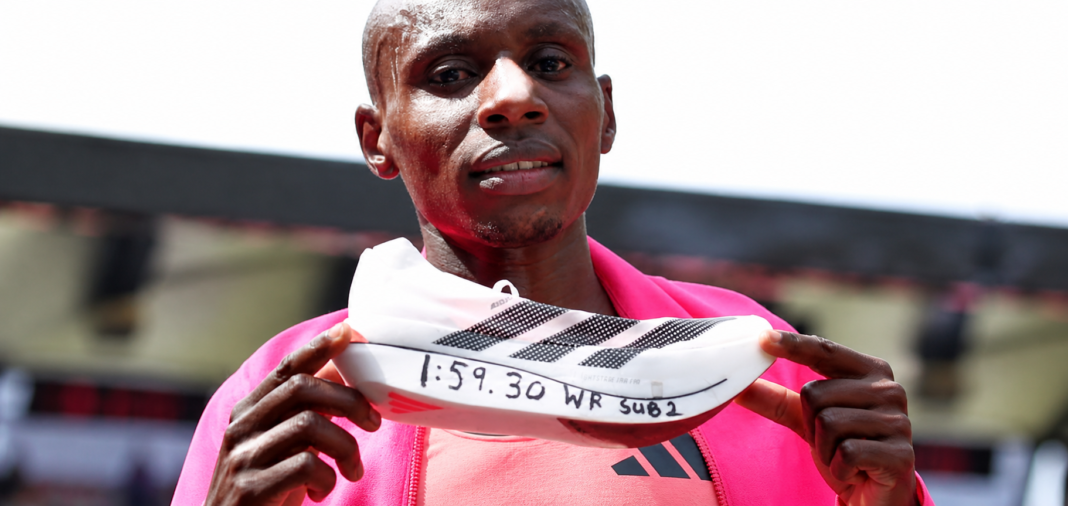
A historic moment in marathon running has put not just athletes—but also footwear technology—firmly in the spotlight.
Kenyan runner Sabastian Sawe made history at the 2026 London Marathon by becoming the first athlete to officially complete the race in under two hours during open competition, finishing in an astonishing 1:59:30. Close behind him was Ethiopian runner Yomif Kejelcha with 1:59:41, while in the women’s race, Tigst Assefa improved her own world record with a remarkable 2:15:41.
But alongside these incredible performances, another star emerged: Adidas’ latest racing shoe, the Adidas Adizero Adios Pro Evo 3.
The Shoe Behind the Speed
As Sawe crossed the finish line, an Adidas official quickly collected his shoes—highlighting just how significant the footwear was to this achievement. The pair was later preserved in Adidas’ archives in Germany as part of the moment’s sporting legacy.
According to Adidas, the Evo 3 is its lightest and fastest racing shoe ever, weighing only 97 grams—roughly the same as a bar of soap. That makes it nearly 30% lighter than its predecessor and the company’s first sub-100g racing shoe. Reuters reported that the design also improves running economy by around 1.6%, a major advantage over marathon distance.
Experts often note that reducing shoe weight by around 100 grams can improve running performance by approximately one percent—enough to save nearly a minute in a marathon.
What Makes It So Special?
The Evo 3 was developed over three years and features several performance-focused innovations.
Its standout feature is Adidas’ next-generation Lightstrike Pro Evo foam, which is nearly 50% lighter than previous versions while also offering stronger energy return and better cushioning.
The shoe also introduces a new carbon propulsion system called EnergyRim, replacing the traditional rod structure to improve stiffness and forward momentum.
Its upper section uses an ultra-light fabric inspired by kitesurfing materials instead of conventional running shoe mesh. Designers also removed unnecessary stitching and shortened the laces to reduce every possible gram of weight.
Even the outsole was redesigned with selective use of Continental rubber for grip without extra bulk.
The Rise of “Super Shoes”
This is part of a much bigger trend in elite running: the rise of “super shoes.”
Carbon-plated marathon shoes have transformed long-distance racing over the past few years, sparking fierce competition between major global brands like Adidas and Nike.
These shoes are designed not just for comfort, but for measurable performance gains—helping runners conserve energy, recover faster, and maintain higher speeds for longer.
Earlier versions like the Adidas Adizero Adios Pro Evo 1 had already made headlines for weighing just 138g and costing $500, but the Evo 3 pushes those limits even further.
Limited editions of the shoe sold out within minutes, with resale prices climbing into the thousands of dollars.
More Than Just a Shoe
For Adidas, the Evo 3 represents more than a race-day product—it is a statement of innovation.
The company says the technology developed for the Evo 3 will influence future products across its running lineup, helping strengthen its identity as a modern performance brand.
As marathon times continue to fall, one thing is becoming increasingly clear: in today’s elite racing world, speed is no longer just about the runner.
Sometimes, it starts with the shoes.